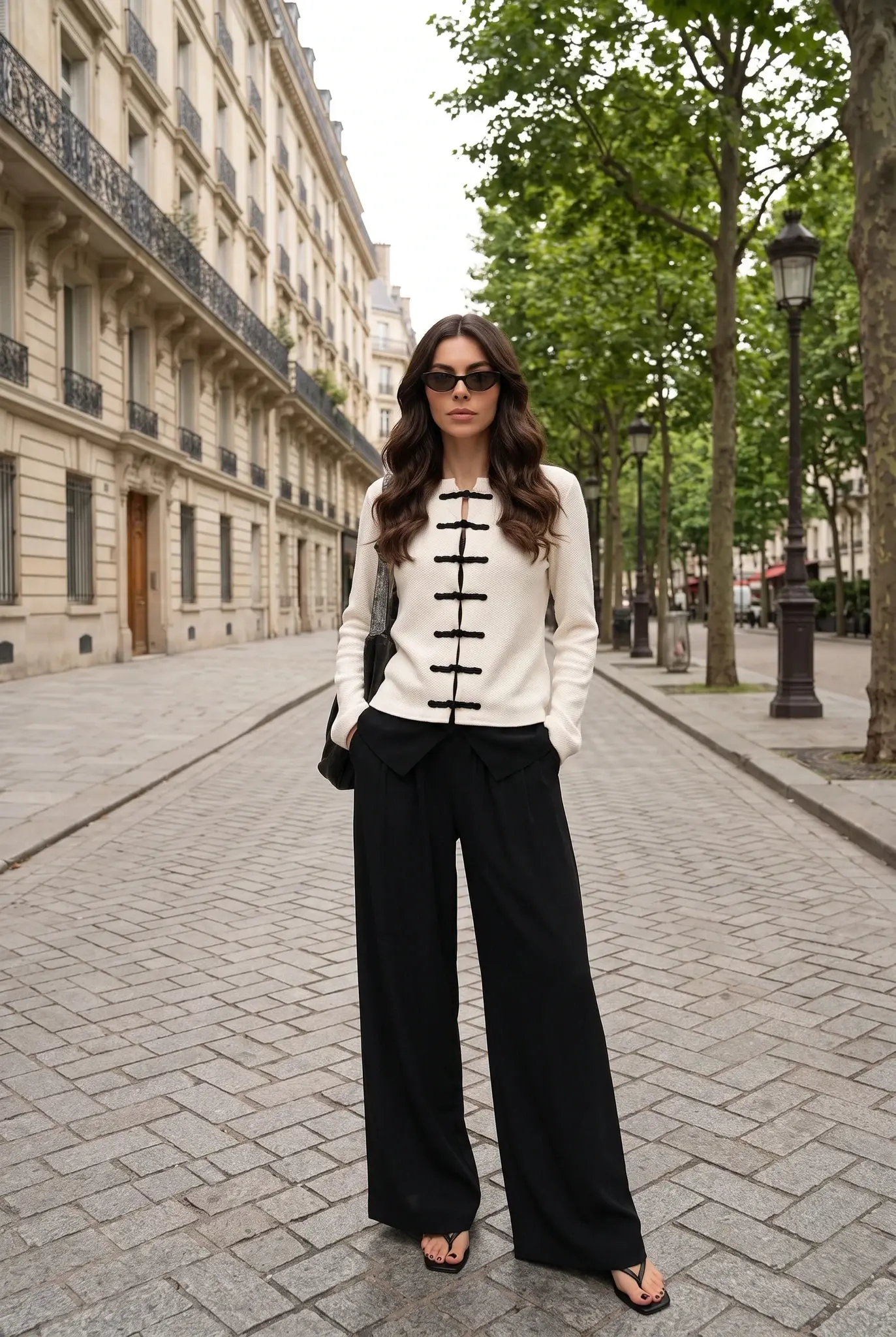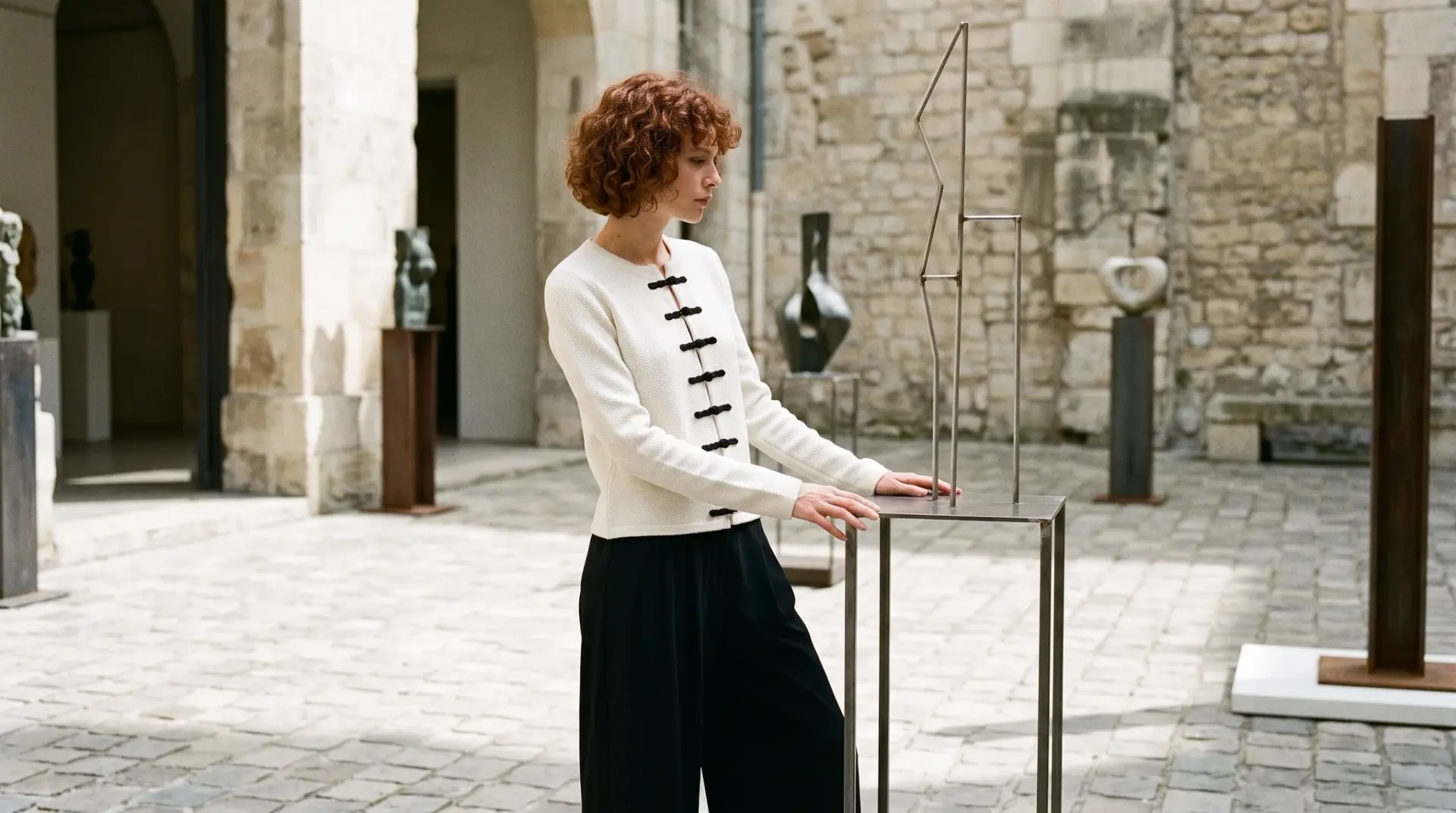
Most of the decisions you make staring into your closet at half past seven in the morning turn into a physical annoyance by lunch. Anticipating a cold bus stop or a windy subway platform, you pull on a chunky sweater. That works fine outdoors. Then half past eleven hits, the office radiators are blasting at 74 degrees, and you find yourself trapped in a woolen cage. Choosing a thin cotton shirt, on the other hand, leaves you shivering and hunching your shoulders at your desk all day. A tailored jacket imposes a rigid corporate strictness, and the stiff shoulder padding puts real strain on your neck muscles as you type. Standard thin cardigans usually lose their shape after two washes and become expensive pajamas. It takes effort to find a mid-weight layer that fits under a winter coat without bunching, prevents you from overheating indoors, and actually looks planned rather than thrown on in a panic. A contrast detail crew neck cardigan fills that exact wardrobe gap. It offers a standard fit that skims the body without clinging, and its soft texture gives way easily when you bend your elbows. The bold contrast details down the front elevate it from a basic backup layer to the focal point of your outfit.
Contrast Details Clash With Busy Necklines
A plain cardigan is a background piece. It sits quietly and lets your pants or shoes do the talking. This specific crew neck knit demands the spotlight because of its contrasting front accessories. That sharp visual line running from the collar down to the hem instantly draws the eye. Putting such a heavy visual focus right in the center of your body comes with rules. Because the cardigan has plenty to say, the top you wear underneath needs to stay completely quiet. A striped shirt or a busy floral collar will clash violently with the contrast accessories and exhaust the eye. While simple clothing can handle heavy jewelry or layered chains, the details on this piece act as built-in accessories. The human eye always gravitates toward the sharpest lines in a silhouette, so a patterned scarf or a chunky pendant creates immediate visual clutter. Keep your base layer patternless and simple around the neck. A plain crew neck tee or a thin camisole does the job perfectly. This ensures the front details stay sharp rather than getting lost in a mess of fabric. Alternatively, you can button the garment all the way up, wear nothing underneath, and use it as a standalone top.
The Geometry of a Hip-Length Cut
A hemline dictates exactly how others perceive your leg length and overall proportions. Cardigans that drop to the knee slice the body in half and visually shorten your legs. Cropped tops that barely clear the ribs ride up the second you sit down or reach for a file, leaving you tugging at the fabric all day. A standard hip-length fit eliminates this physical annoyance. The hem stops right at the hip bone, keeping your proportions intact. That defined length makes choosing your bottom half much easier.
• Wide-leg office pants fall cleanly from a hip-length knit, offering a sleek line without pooling extra fabric at the waist.
• Low-rise skinny jeans pair poorly with this cut, creating a top-heavy profile that elongates the torso unnaturally.
• Straight-leg jeans that sit at the natural waist provide a smooth, continuous line from the shoulders down to the hips.
It helps to consider where different fabrics intersect. When wearing wide-leg pants, a knit that ends exactly at the hip allows the bottom fabric to drape freely. This structural line, falling straight to the hip and then widening toward the floor, delivers the polished, deliberate look required for a professional setting.
Layering Unlined Knits Under Heavy Coats
Thick, lined outerwear has one major flaw: it refuses to fit over heavy winter layers. Try shoving a stiff jacket under a structured wool coat, and you will find you cannot bend your elbows, while your shoulders end up hiked to your ears. Unlined knitwear offers a distinct mechanical advantage here. Lacking a rigid internal structure, it slides seamlessly under heavy outerwear. The crew neckline avoids clashing with wide coat lapels and leaves plenty of room for a thick winter scarf.
You already know the struggle of forcing a chunky cable knit into narrow trench coat sleeves. Your mobility disappears, and reaching for a door handle pulls the fabric uncomfortably tight across your back. This long-sleeved knit glides smoothly against your coat lining and settles naturally on your frame, rather than adding unwanted bulk. When you take your coat off at the office, the fabric looks pristine instead of crushed. Keep in mind that even though the knit is soft, thick or gathered shirt cuffs will create awkward bulges under the cardigan sleeves. Your base layer needs thin, flat sleeves to ensure everything sits flawlessly.
Care Tips to Preserve the Shoulders
The lifespan of a knit depends entirely on your respect for the care label. Tossing a fine knit into a standard machine cycle ruins its cellular structure. The friction of a high-speed spin snaps the fibers and leaves the surface permanently deformed. You must be especially mindful of heat and spin speeds when dealing with contrast front accessories. A delicate wash setting is a strict technical requirement to prevent the fabric from shrinking and the seams around the details from tearing.
The real damage often happens after you take the garment out of the washing machine. Shoving a wet knit onto a plastic hanger and leaving it on a drying rack will obliterate the fit. Wet yarn is heavy, and gravity pulls it straight down, while hangers leave sharp, stretched points on the shoulders. That crisp, hip-length top will dry into a shapeless, baggy sack that hits your knees. To prevent stretching, lay the wet cardigan flat on a clean, dry towel. Keep it at its natural width without pulling at the front details. Drying flat is more than a simple suggestion; it is the primary rule that determines how long the piece stays in your wardrobe rotation.
Styling the Cardigan for the Weekend
Tops with striking front details often end up trapped in a strict workwear rotation. You probably will not wear a boardroom outfit with draped pants to the bakery on a Sunday morning, as the proportions look far too stiff. However, a standard-fit cardigan possesses the natural flexibility to transition between different settings. Swap the tailored pants for your favorite comfortable jeans, and the entire attitude of the knit shifts. Paired with plain, flat denim, that serious crew neck takes on a relaxed, everyday vibe.
Maintaining a sharp focus remains the main rule here. The contrast accessories provide all the visual action you need, so wearing loud pants or aggressive shoes will wreck the balance. Stick to lightly washed jeans without rips to keep attention focused on the knit. A plain tee and straight-leg denim allow the character of the cardigan to carry the entire outfit. There is no need to stand in front of the mirror for ten minutes testing different necklaces or belts. The garment makes a clear statement and requires absolutely no extra help. Provided you match it with the right pants and follow the washing rules, a top like this will never gather dust at the back of your closet. Browse our women's knitwear collection to refresh your everyday wardrobe.