Waiting on a freezing train platform at eight in the morning, wrapping yourself in heavy wool feels like a basic survival tactic. You pull a thick knit tight against the wind and trust it to do the job. Then midday hits. The office heating kicks into overdrive, and all that bulk suddenly feels suffocating. Many of us try to force a chunky dropped-shoulder jumper inside a tailored winter coat. Shoving those massive sleeves down narrow coat arms is a workout on its own. Once you actually manage it, you can barely bend your elbows. The stiff fabric bunches up around the neck, widening your frame completely out of proportion. Then the temperature climbs, you drag the thick wool over your head, and your carefully styled hair is completely ruined.
What you actually need is a piece that behaves a bit like a structured jacket but still feels like a soft knit.
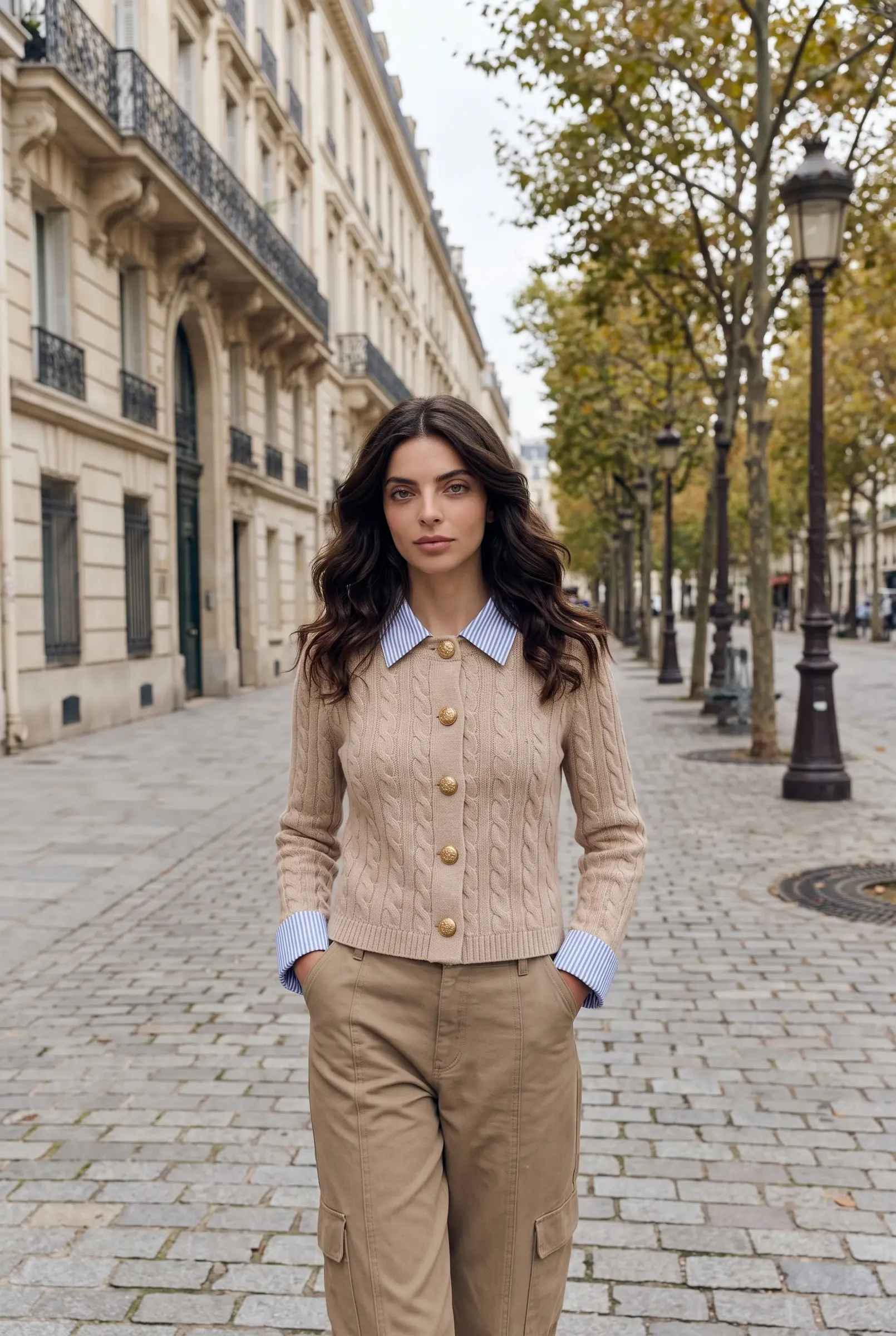
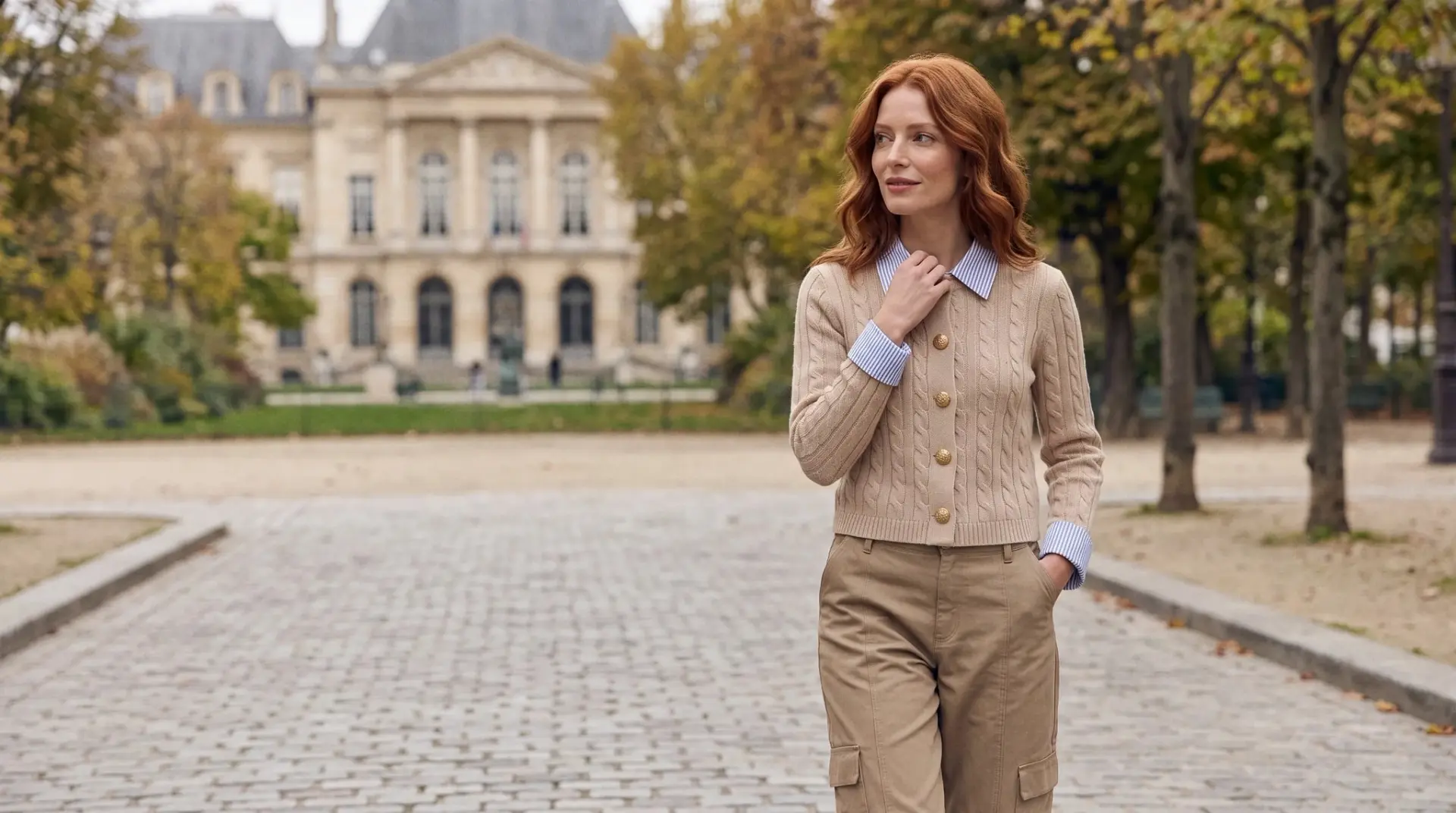
A hip-length beige cable knit cardigan sorts this out immediately. It traps your body heat without suffocating you, giving your skin room to breathe. When the room gets stifling, you just pop open a few buttons to adjust to the temperature. If you really need to take it off, it slips over your shoulders cleanly. Your makeup stays exactly as it was.
How a Collared Neckline Reshapes Your Shoulders
Standard crew necks and V-necks share an obvious structural flaw. They just sit there loosely, failing to frame your face with any real definition. Adding a shirt collar completely changes how a top holds itself. Knit yarn is naturally soft and heavy, dragging downwards the moment you put it on. Putting a structured collar on it draws a strict boundary around all that draping fabric. That firm edge frames your face directly and sharpens your shoulder line instantly.
People glance at you and assume you are wearing a crisp, ironed shirt.
What actually sits against your skin is a soft, stretchy yarn. Let's be honest, wearing knitwear to work often gives off a lazy weekend vibe. The collar entirely kills that slouchy look. Sitting in a serious meeting or working directly across the desk, that stiff neckline does all the heavy lifting to keep you looking strictly professional.
Dark dyes swallow up all the details and shadows in a knit. A soft beige puts every single stitch on display. You can see the exact texture of the yarn, the sharp cut of the body, and the shape of the collar from right across the room.
Layering a classic striped shirt underneath requires some specific geometry. Stacking two heavy collars on top of each other chops your neck in half and makes it look noticeably short. Do not pull the inner collar over the top. Tuck the thin cotton shirt collar entirely inside the cardigan's neckline. Letting the crisp cuffs of the shirt peek out just below the cardigan sleeves shows you actually thought about your clothes this morning.
Why Vertical Ribbing Stops Fabric from Sagging
Flat knits always surrender to gravity in the end. Lean on your desk for a few hours, and you end up with baggy, misshapen elbows. By five o'clock, the hem goes completely slack and flares out at the hips. The vertical knit pattern down this piece works like a structural skeleton rather than a pretty decoration. Those rigid lines stop the fabric from stretching horizontally out of shape. The yarn moves with you when you twist, then snaps straight back into its original cut.
These built-in boundaries stop your clothes from drooping like a tired sack.
Vertical lines draw the eye straight down, trimming the silhouette instantly. Paired with a regular fit, it keeps the body sitting exactly where it should around your waist, without pooling excess fabric across your back or shoulders. The fitted cuffs do the exact same job for your arms. They anchor the long sleeves securely at your wrists. You will not spend half the day pushing your sleeves back up to type on your keyboard.
Normal knits love to stretch horizontally and only get wider in the wash. A ribbed vertical structure forces the fabric to pull inward, stopping that outward spread dead in its tracks. This exact tension is why it hangs cleanly on different body shapes. Pair that heavy textured yarn with completely smooth trousers, and all the visual weight stays right up top where you want it.
The Right Way to Handle Buttons and Bunching
Front closures do the exact same job as load-bearing walls in a house. Most high street brands slap on cheap plastic buttons dyed to match the yarn just to save pennies. A cheap fastening ruins the whole garment in seconds. Proper metallic button details completely rewrite the identity of the piece, upgrading it from a basic sweater to something closer to a sharp jacket. The cold flash of metal against the warm beige yarn forces the eye to notice the texture of the wool. It strikes an exact, deliberate contrast.
We all know those tricky office days where a tailored blazer feels far too stiff, but sitting in a thin cotton top feels wildly unprofessional. Fasten the front, push the sleeves back to your elbows, and you immediately look ready for work.
Fasten every single button and sit down at your screen, and the fabric will immediately bunch up across your stomach. The gaps will pull open, flashing your skin to the whole room.
• If you wear the cardigan on its own as a top, always leave the bottom button completely undone.
• Releasing that bottom fastening lets the two sides part smoothly over your hips as soon as you sit down.
• This relieves the tension across your waist and stops that awful bulging entirely.
Pairing Your Layers and Trousers Correctly
Pairing a hip-length cut with a massive, trailing maxi skirt chops your body straight in half. It drags your height down and makes your waist look twice as wide as it actually is. Sticking to structured trousers with firm lines fixes the proportions instantly. A pair of tailored trousers tapering to the ankle, or stiff denim for a weekend trip, draws a sharp line directly under the hem. Keep things simple for the office by matching the beige with heavy charcoal, deep navy, or dark brown trousers to avoid a messy clash of colours.
Whatever you trap underneath a stretch knit dictates your entire silhouette.
People constantly try to shove another heavy wool jumper under a thick layer. The cuffs might stretch to accommodate it, but stuffing bulky yarns under a fitted sleeve instantly destroys the shape of the arm. Every seam and thick fold from the bottom layer pushes through to the outside. Putting a paper-thin cotton top or a light vest underneath is the only rational choice. It lets the fabric drape down your back without clinging to your shoulders. When the temperature drops below 10°C, stop piling on inner layers and buy a properly tailored wool coat to fix the cold instead.
Letting just a tiny sliver of an ice-blue cotton collar show at the neck draws the eye straight to your face. Getting the underlayer right stops you dragging at your hems and collars all afternoon. You can reach across a meeting table without your shoulders locking up, and you will not end up with a huge lump of trapped fabric digging into your spine when you lean back in your chair.
Keeping the Shape Intact in the Wash
Keeping that heavy texture and original snap in the yarn depends entirely on how you wash it. Thick wool pulls in water and instantly weighs three times as much. Hanging a soaking wet knit on a plastic hanger forces sharp, permanent points right into the shoulders. The sheer weight of the water drags the whole thing towards the floor and stretches the body out by several centimetres. You have to run it on a delicate cycle with similar shades. Laying it totally flat to dry is an absolute requirement, letting the water evaporate evenly so the threads shrink back to their original tight weave.
A gentle machine setting stops aggressive friction from tearing up the ribbed pattern. Keep the temperature down, or the yarn will cook, harden, and lose its stretch entirely. Dial the spin cycle down to the absolute minimum to stop the fibres knotting together in the drum.
A solid wardrobe relies entirely on clothes that demand zero thought at six in the morning while still holding their own in a boardroom. To handle freezing mornings and overheated offices in one go, add a beige button-detail sweater to your basket today.