We've all bought a pair of wide trousers hoping for a clean, sweeping line, only to end up fighting the fabric by lunchtime. You sit at your desk for three hours, stand up, and the waistband has completely rolled over. The pleats look crushed. You spend your entire walk to the coffee shop yanking the sides up and pulling everything back into place. That constant adjusting usually comes down to weak construction at the very top. When a garment asks you to carry a massive amount of fabric around your legs, a thin strip of elastic simply can't anchor the weight. A flimsy band collapses under the tension of the drape. You need serious structure up top to handle all that volume at the bottom.
The Engineering of a Structured Waist
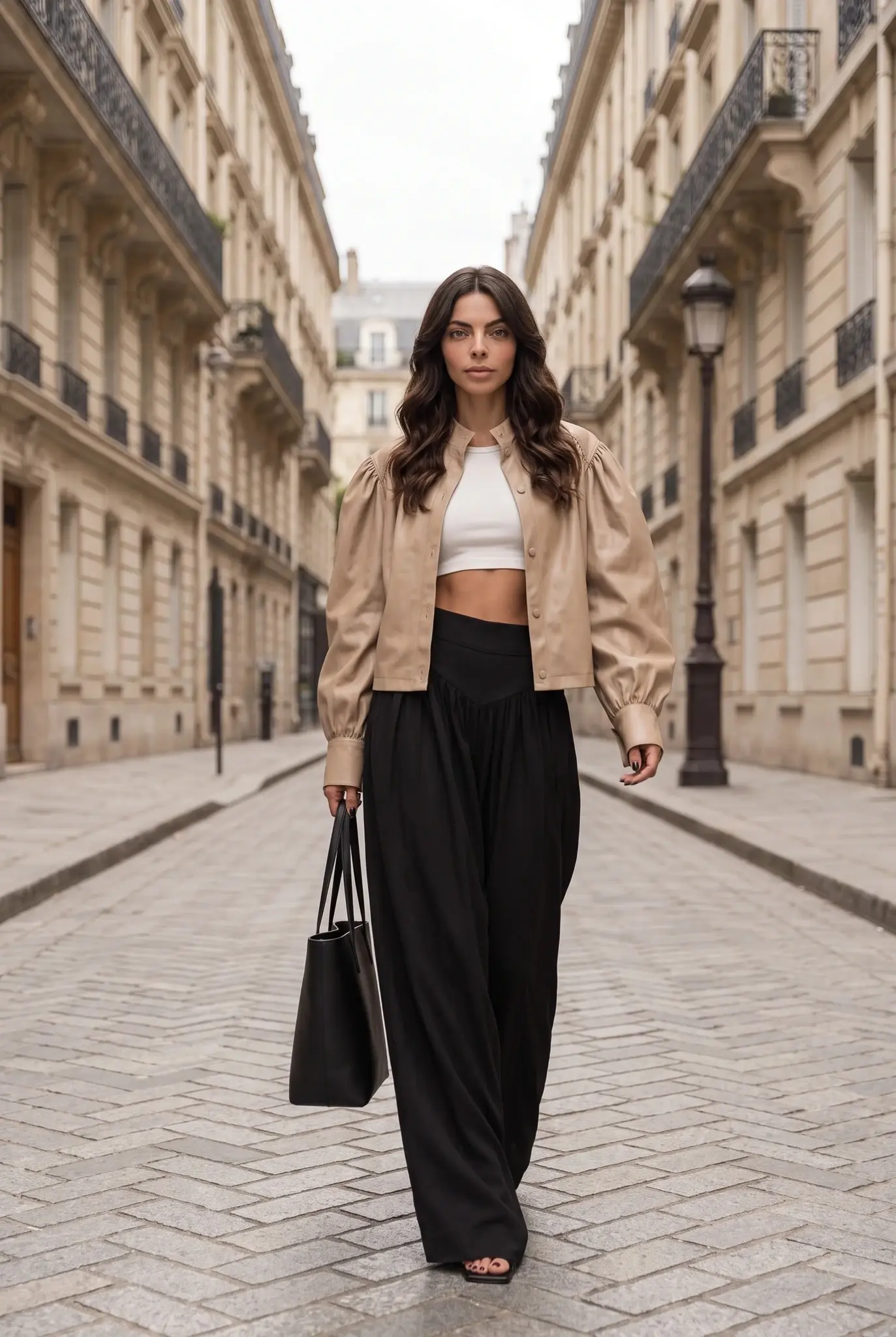
A thick waistband completely changes the geometry of a trouser. It creates a solid foundation for the rest of the garment to hang from. Instead of digging into your stomach or shifting around every time you reach for something, a wide band sits flat against the torso and stays put. The high waist pleated wide leg trousers in black show exactly how this works. The thick structured waistband drops down in a sharp line before the gathered pleat details even begin. That specific cut does a huge amount of heavy lifting for your posture and your outfit.
It holds the high-rise position securely above the hips.
You never get that terrible sagging effect in the seat after a long morning commute. The structure forces the fabric below it to behave properly. Because the pleats start underneath a thick band, the volume pushes outward rather than bunching up directly under your ribs. That gives your hips and legs ample room to move while keeping the narrowest part of your torso defined. You get the dramatic look of a wide leg without feeling like you're wearing a shapeless sack.
Sizing Up Is the Only Option
These trousers come in sizes XS, S, M, and L. You have to be totally honest about your measurements here.
A thick waistband has absolutely no give. Buy a size too small and the band will dig in painfully after a heavy lunch. Worse, the gathered pleats will pull completely flat across your hips, destroying the drape of the smooth woven fabric. Always fit the waist first. People tend to panic when they see the volume of the legs in the mirror and try to size down to reduce the width. Ignore the legs entirely. The fabric needs that extra room to swing and settle back into place as you walk. That's literally how a wide leg silhouette is supposed to function.
Go up a size when you land between two measurements.
A slightly loose waistband is an easy job for a local tailor. They can take in the back seam in twenty minutes. You can't invent fabric that isn't there.
Forcing the Top Half Short
A massive lower half demands strict control over what you put on your top half. Throwing a long, loose jumper over voluminous trousers instantly adds bulk to your frame. The proportions get muddy. You lose the waist entirely and end up looking like a block of fabric walking down the pavement. The easiest fix is to cut the top layers short.
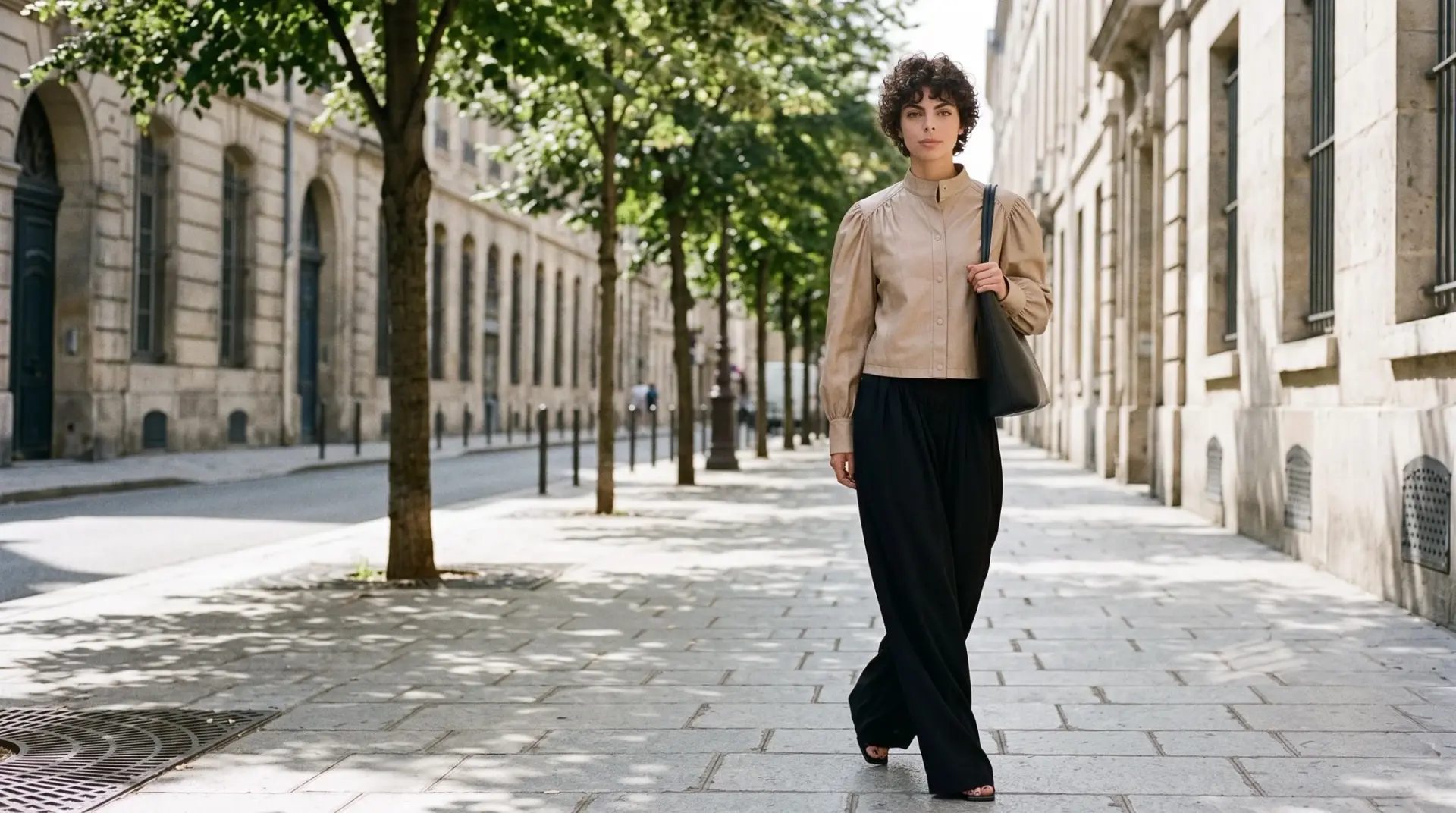
The black trousers work incredibly well with a simple white crop top and a tan cropped jacket. The jacket features slightly puffed sleeves, adding a bit of width at the shoulders, but it stops exactly where the high waistband begins.
This isn't an accident.
Exposing the waistband lets the trousers do their job of defining your middle. The crop top underneath leaves just a fraction of skin visible, breaking up the heavy blocks of colour. Had that jacket been cut longer, it would've swallowed the waist and ruined the entire silhouette. A thick jumper that refuses to tuck in neatly creates a strange bulge under the structured waistband. Stick to pieces that end at your natural waistline or thin tops that tuck in without leaving lumps.
Committing to a Strict Shoe Height
A smooth woven fabric with a lightweight drape moves beautifully when you walk. That movement comes with a heavy cost when you get the hem wrong.
A sweeping wide leg silhouette looks best when it nearly grazes the floor. A hem that hovers awkwardly around the ankles cuts your leg line completely short and looks like a tailoring mistake. But dragging a lightweight fabric through wet city streets at eight in the morning is a total nightmare. The damp wicks up the bottom edges of the trouser leg and leaves you miserable. You have to commit to one specific shoe height and stick with it.
• Hem for flat shoes when you walk long distances every day, allowing the fabric to flow naturally and stay off the damp pavement.
• Hem for a block heel to get maximum leg length, but expect the trousers to look completely wrong when you kick your shoes off under your desk.
Pick the shoes you actually walk in regularly. Have the trousers tailored to sit just above the ground in those exact shoes. You can't hem a wide leg for heavy boots and expect it to work with flat sandals on the weekend.
The Wind and the Train Carriage
A lightweight drape feels fantastic in a crowded train carriage or a stuffy office block heated to 24°C. The fabric breathes well. The wide cut lets air circulate freely around your legs.
That same lightweight drape behaves very differently on a windy street corner.
The sheer volume means the fabric catches the breeze, wrapping tightly around your legs and completely changing the shape of the trousers for a few seconds. You simply have to accept this as part of wearing wide legs. Stiff, heavy wools resist the wind perfectly, but they feel like medieval armour once you get indoors. This smooth woven fabric trades wind resistance for indoor comfort and fluid movement. It's a fair trade. Just be aware of the mechanics when you're standing on an exposed platform waiting for a train. The way the trousers fall straight back into a clean, dramatic line once you step inside makes up for the temporary chaos outside.
Black Trousers Hide the Worst Wrinkles
Black trousers are the default uniform for a reason, but they demand their own kind of attention. A black smooth woven fabric shows dust, lint, and pet hair much faster than a beige or brown alternative.
People with white dogs might actually find beige or brown to be the smarter daily choice. It saves them from carrying a lint roller everywhere they go.
Yet black provides a sharp, graphic contrast that makes the pleats stand out properly. It anchors a light-coloured jacket perfectly. More importantly, black hides the dark shadows of the wrinkles you inevitably get behind your knees after sitting through a two-hour budget meeting. The beige and brown options certainly offer a softer look. Black remains the sharpest tool for creating a hard, defined silhouette against a pale top.
You get the structure you need without feeling restricted when the proportions on top are correct. Pick up a pair in the shop to see how the drape works in person.