Buying a knit sweater three sizes too big and pulling it on over sweatpants is how you end up looking like you rolled out of bed and straight into a laundry bag.
It's a piece featuring sharp lines up top thanks to that classic polo collar and partial front button placket, matched against an oversized relaxed fit with drop shoulders that hang past the waist. When you're wearing something with this much volume, every other item in your outfit has to pull its weight so you don't disappear inside the wool. You can't just throw it on and hope for the best.
Weight and Structure in Relaxed Knits
Fabric weight dictates everything when you deal with relaxed silhouettes. This soft medium-weight knit has enough gravity to fall straight down instead of puffing outward like a balloon. Drop shoulders change where the seam hits your arm, pushing the shoulder line lower down your bicep. That's why you can't layer a heavy winter coat with tight armholes over it unless you enjoy cutting off your blood circulation. Instead, keep your outer layers roomy enough to accommodate those broad seams without bunching up under your arms during your commute.
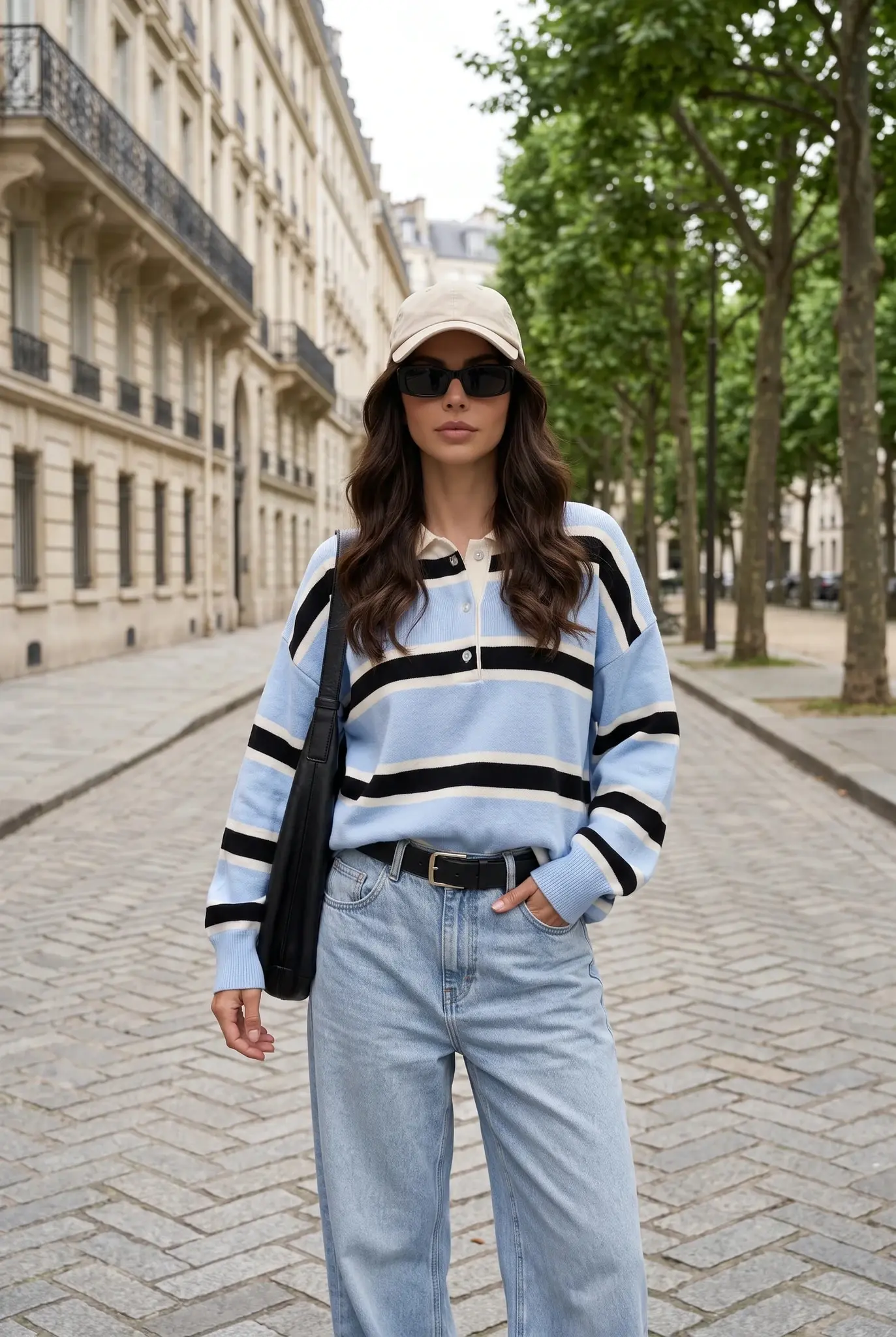
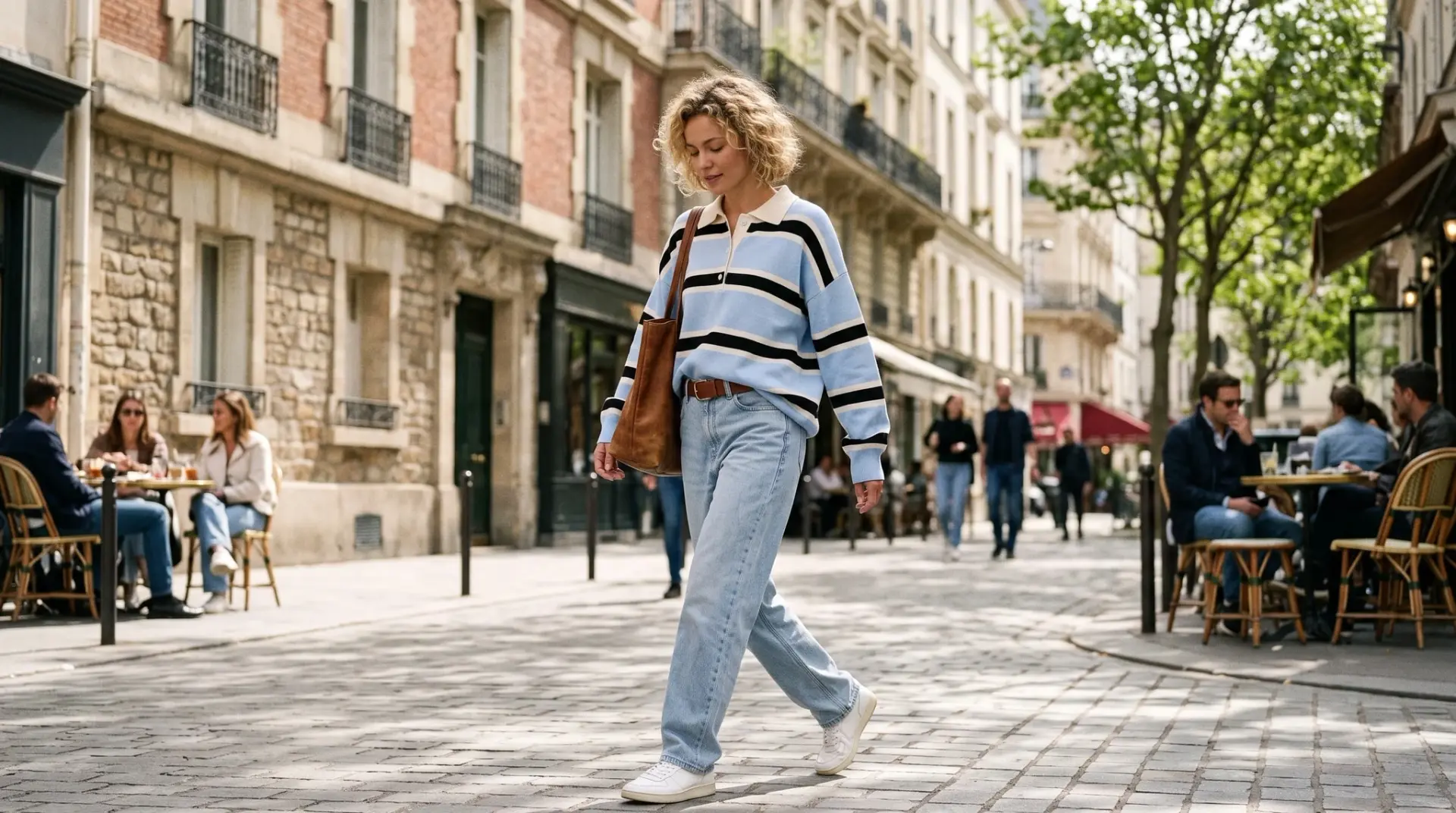
Tucking a heavy knit into trousers rarely works because the fabric bunches up around the belt line and creates an unsightly lump. Leave it out over straight-cut denim or let it rest naturally against the top of your hips. To define your waist, skip the tuck and add a leather belt outside your jeans instead of letting the hem ride up awkwardly. The flexible standard size format means the garment drapes differently on every body type, so finding that sweet spot on your hips takes one minute of adjustment in front of the mirror before you step out the door.
• Pair with straight-leg denim that balances the upper volume.
• Avoid skinny jeans that make the top half look disproportionately massive.
Managing Horizontal Stripes in Daily Outfits
Horizontal stripes carry a bad reputation among people who read outdated fashion advice from decades ago. They claim stripes widen the body, but that rule ignores how scale and proportion actually operate in broad daylight. Wide bands of color draw the eye across your chest, creating a graphic punch that breaks up a monotonous outfit. Since this knit features a horizontal stripe pattern with long drop-shoulder sleeves, your supporting pieces need to pick up one of those tones to maintain visual harmony.
Wearing blue jeans that match the primary hue of the knit creates a clean vertical line from top to bottom, even though the torso is striped horizontally. Black accessories like a leather belt or a structured shoulder bag anchor the dark stripes without competing for attention. Keep your jewelry minimal. A pair of dark sunglasses or a plain cap in beige keeps the look grounded in daily reality rather than runway theory, protecting you from midday glare while walking down a busy city street.
Pattern mixing requires a steady hand when dealing with bold graphics. Throwing a leopard print scarf or a plaid jacket over horizontal stripes turns your outfit into a visual shouting match. Keep everything else solid and let the knit do the talking. When one garment carries strong visual weight, the surrounding pieces act as quiet framing devices rather than competing stars.
The Mechanics of Polo Collars and Buttons
A polo collar changes how you frame your face compared to a standard crew neck or a slouchy turtleneck. It frames the collarbone and gives you room to breathe, preventing the boxy cut from looking like a sack.
Button Placement Rules
Leaving two buttons undone creates an open V-shape that elongates your neck, which counteracts the horizontal pull of the stripes. Buttoning it all the way to the top shifts the vibe toward something formal, almost collegiate, which requires a sharper jacket or cleaner pants to make sense. Most days, one button undone on the partial front button placket hits the right balance between relaxed and put-together, especially when you're rushing out the door with a coffee in hand.
Anchoring the Look with Footwear and Bags
Shoes can make or break an oversized top. Dainty flats make the wearer look top-heavy, as if a strong gust of wind might blow them over. Chunky loafers, retro running shoes, or sturdy leather boots provide the visual weight required to anchor the bottom half of the body against a heavy upper garment.
Bags matter just as much for daily utility. A structured leather shoulder bag with clean geometry cuts through the soft, slouchy texture of the knitwear. Avoid slouchy hobo bags that add more softness to an already relaxed outfit. Contrast is what keeps casual dressing from looking sloppy during a long commute.
Proportions extend down to your ankles and wrists. Letting the ribbed cuffs sit naturally at your wrists rather than pushing them up to your elbows preserves the intentional slouch of the drop shoulders. Rolling sleeves up on a medium-weight knit creates awkward bunching at the forearms that ruins the clean lines of the drop-shoulder seam.
Surviving Temperature Swings Through the Day
Mornings require warmth on city streets, but by afternoon you might be sitting in a sunlit cafe where heavy wool feels entirely wrong. Because this soft medium-weight knit features a breathable feel, you can wear it indoors without overheating, provided you skipped a heavy undershirt. When the wind picks up during an evening walk across town, pull the collar up slightly and add a classic cap. You stay warm without resorting to heavy layers that leave you stiff and uncomfortable by lunch.
Dressing well is about understanding how fabrics interact with gravity, how colors play against each other in natural light, and how to stay comfortable when the weather refuses to cooperate. Treat your knitwear as the centerpiece, build a clean foundation around it, and let the rest of your wardrobe work for you. Grab the blue oversized striped knit polo sweater from the store and put these ideas into practice today.