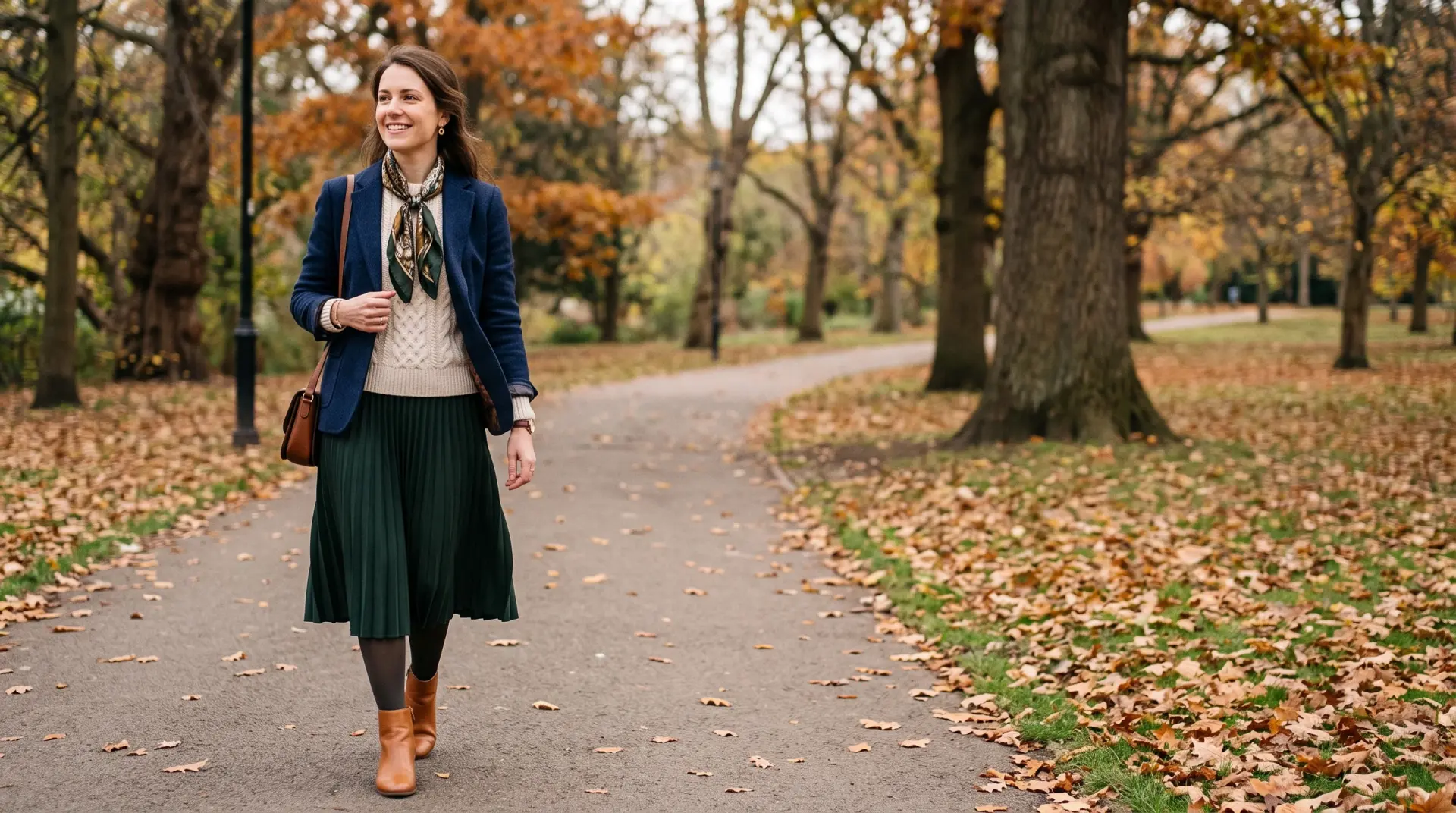
Most people start October by throwing a chunky jumper over a silk dress and hoping for the best, only to spend the entire afternoon sweating on the train and freezing the moment they step onto a windy platform at 8 in the morning. Layering isn't about putting on as many clothes as you own until you look like a walking duvet. It is an exercise in temperature control and tactile contrast. If your coat won't close because your sleeves are too thick, you've failed physics, not fashion. Let's look at how to layer clothes for autumn properly, focusing on pieces that actually work together in real life.
Why Your Autumn Outfits Feel Wrong
The biggest mistake is starting with the heaviest piece. You build an outfit from the skin out, not from the heavy coat in. If you put a thick wool sweater over a cotton shirt, the shirt bunches up behind your shoulders and makes you look stiff.
Instead, the base layer needs to be thin and smooth. A fine cotton turtleneck or a fitted long-sleeve tee acts as your foundation. It stops the cold air from creeping in at the wrists and neck, which is usually where you feel the drop in temperature first. Once that base is secure, you can add mid-layers that have actual structure, like a tailored vest or a light cardigan, before any heavy outerwear enters the equation.
Think about what happens when you move between a heated office and an unheated corridor. A rigid, heavy setup leaves you trapped. When you build with lighter components underneath, you can shed a cardigan without unraveling the whole architecture of what you're wearing.
Pairing Knitwear With Dresses and Skirts
Putting a heavy sweater over a summer dress usually ruins the proportions. You end up looking top-heavy, with a massive knit torso and a thin scrap of fabric hanging out at the bottom.
If you want to wear knitwear with dresses, flip the script. Put the knit underneath and the dress on top. A fine-gauge ribbed turtleneck under a slip dress gives you warmth without the bulk, and the contrast between heavy wool and fluid silk or satin is precisely what makes autumn dressing interesting. When you're working with skirts, tuck your jumper in properly rather than letting it slouch over the waistband. A chunky knit blurs your waistline into nothingness; a slim-fit knit tucked into a wool midi skirt gives you your shape back.
There is also the matter of skirt length against boot heights. A midi skirt that cuts off mid-calf while your boot top sits higher creates an awkward gap where cold air catches you every time you take a step. Let the hem overlap the boot shaft by 2 cm or leave a clean, deliberate span of leg if the weather permits.
The Blazer in Transitional Weather
A blazer is the most reliable tool for autumn layering, provided it's cut with enough room in the arms. If your blazer fits like a tailored suit jacket from July, you can't put anything under it except a thin blouse.
Buy your autumn blazers one size up or look for styles explicitly cut for layering. This lets you wear a crewneck jumper underneath without cutting off your circulation. When it gets colder, throw a trench coat or a wool wrap coat right over the blazer. The secret here is collar management. Pop your shirt collar over the blazer lapel, and let the blazer collar sit under the coat. If all three collars fight for the exact same space around your neck, you'll look choked.
People often forget that lapels have weight. A heavy wool coat over a sharp peak lapel creates a jumbled mess at the shoulder. Pair structured jackets with softer coats, or let the stiffer piece sit on the outside where its lines can do their actual job.
Skirts, Tights, and Boots
Bare legs and a heavy winter coat look disjointed, as if you got dressed for two different seasons at the same time. Autumn requires a bridge between your footwear and your hemline.
Heavy wool skirts and pleated midi skirts need opaque tights or thick ribbed socks that bunch slightly over ankle boots. If you wear sheer black tights with a heavy tweed skirt, the visual weight is all wrong. Match the weight of your legwear to the weight of your skirt.
If you're wearing knee-high leather boots under a midi skirt, let the hem drop low enough that you don't see a stripe of bare skin when you sit down on a bench or a bus seat. Little details like that separate outfits that hold together from outfits that fall apart halfway through the day.
• Choose fine merino wool base layers instead of bulky synthetics to control core temperature without adding unwanted volume to your torso.
• Ensure your outerwear has enough shoulder room to accommodate a mid-weight sweater underneath before you commit to buying.
Take a look through our current collection of unbranded autumn clothing to find dependable pieces for your wardrobe.